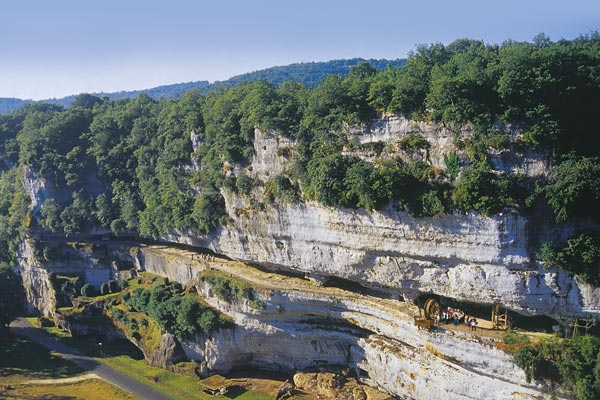
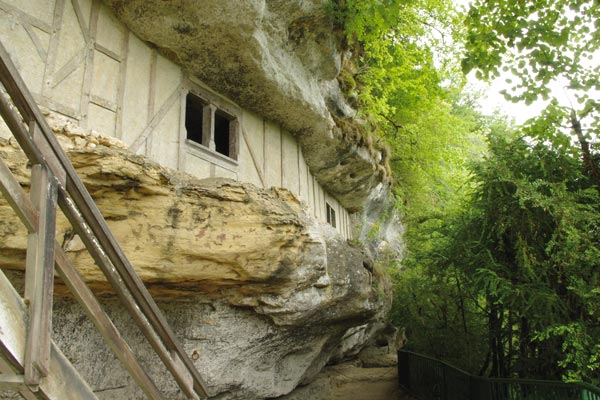
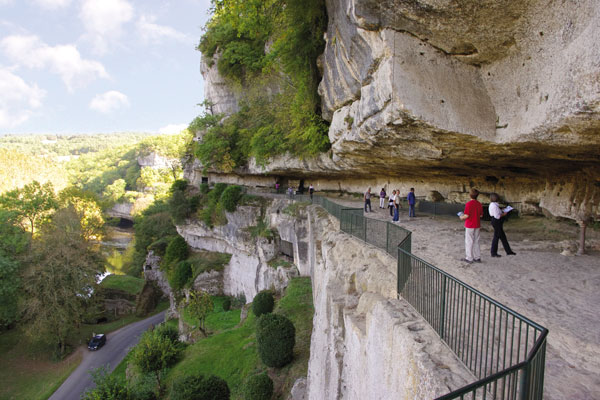
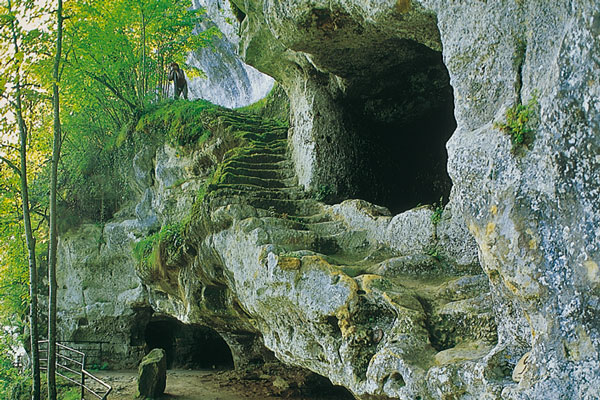
Remarquable par ses formes puissantes, le nombre de ses habitats et l'ancienneté de son occupation par l'Homme, la Roque Saint-Christophe est nichée dans un cadre sauvage d'une rare beauté.
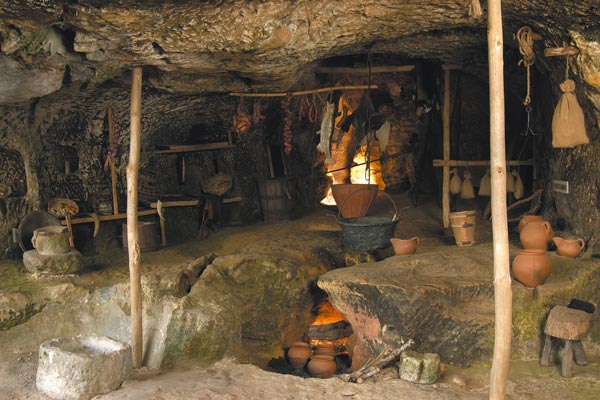
C'est un véritable mur de calcaire, d'un kilomètre de long et haut de 80 mètres ! érodé par la rivière la Vézère et le gel au cours des millénaires, une centaine d'abris sous-roche s'est creusée sur ses terrasses aériennes. Ces cavités naturelles ont été occupées par l'Homme dès la Préhistoire, puis aménagées pour devenir un fort et une cité troglodytiques, du Moyen Âge jusqu'au début de la Renaissance.
Située sur la commune de Peyzac-le-Moustier, proche des vestiges qui donnèrent leur nom à l'époque moustérienne, la Roque-Saint-Christophe est un modèle rare et unique de
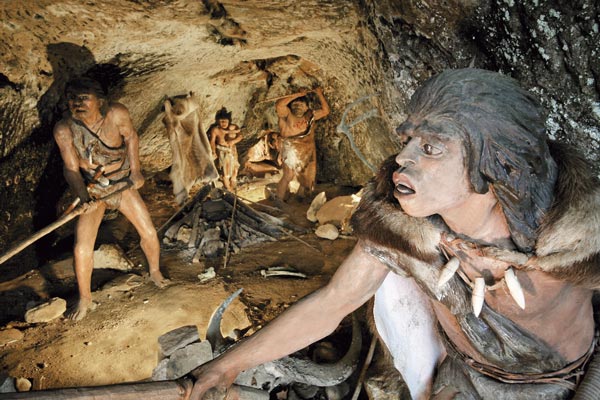
l'habitat troglodytique et de son évolution. Les traces de la vie quotidienne attestent de l'habileté de ses premiers bâtisseurs. Les visites guidées ou libres grâce à des panneaux d'interprétation, donnent une idée précise de ce que fut cette haute falaise où l'on imagine le fourmillement de la cité. D'autres surprises, d'autres mystères, d'autres trésors vous attendent dans ce lieu unique, habité depuis 55000 ans par l'humanité.
Animations à la Roque Saint-Christophe.
L'équipe de la Roque Saint-Christophe vous propose une
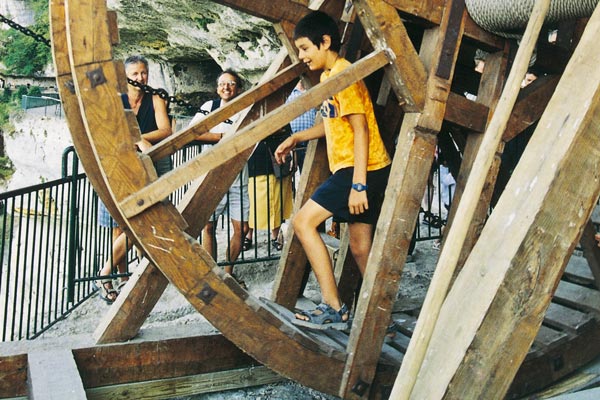
multitude d'activités pour toute la famille : des visites libres ou guidées, des démonstrations de machines de levage médiévales, des ateliers thématiques participatifs, un guide de visite pour les enfants, un jeu de piste et un film en 3D présentant la reconstitution du site de sa formation jusqu'au début de la Renaissance. Des animations ludiques et instructives sont proposées pendant la saison, elles plairont à toute la famille, ainsi qu'aux connaisseurs appréciant les informations historiques riches et contextualisées.
Nouveauté 2025 :
Quand la nuit tombe, La falaise s'éveille
Un parcours lumineux et vivant, une promenade nocturne qui émerveille toute la famille. Un parcours enchanteur pour petits et grands, au cur de l'un des plus beaux sites troglodytiques d'Europe. Un chevalier surgit, une danseuse virevolte, un jongleur éclaire la nuit
Une ambiance sonore immersive, des peintures lumineuses projetées sur les parois : vous cheminez dans un rêve où la falaise prend vie. Billetterie séparée. Tous les soirs du lundi au jeudi à partir de 22h. RÉSERVATION FORTEMENT CONSEILLÉE
VIVEZ UNE SOIRÉE COMPLÈTE À LA ROQUE !
Dînez en famille au pied de la falaise : LES DÉLICES DE LA ROQUE vous accueillent chaque soir de nocturne (sur réservation).
LES LUNDIS : MARCHÉ GOURMAND Face à la paroi dorée par le soleil couchant 14, 21, 28 juillet et 4, 11 août Ambiance conviviale + produits locaux = la plus belle soirée de l'été !
Animations incluses dans le billet d'entrée :
Animation en pied de falaise, un lieu privilégié et nouvellement ouvert au public ! Guillaume le chevalier et Bayard son destrier vous content la relation entre l'homme et le cheval au Moyen Âge.
Musique des Origines : Un atelier participatif sur les instruments de musique de nos ancêtres, un concert paléo à la fin de chaque session !
Oiseau, qu'as-tu à me dire ? Un atelier sur le chant des oiseaux.
Visites guidées avec démonstration des engins de levage.
La Roque-St-Christophe
24620 PEYZAC-LE-MOUSTIER
Tel :
05 53 50 70 45
Site :
www.roque-st-christophe.com
email :
contact@roque-st-christophe.com
 |
 |
 |
Tarifs / Horaires
Tarifs haute saison (du 1er avril au 15 novembre)
Adultes : 12,90
Étudiants (jusquà 25 ans inclus avec carte) : 9
Enfants (15 à 17 ans) : 8,50 - Enfants (8 à 14 ans) : 6
Enfants (moins de 8 ans) : gratuit
Tarifs du spectacle nocturne
Adultes : 18
Enfants (8 à 17 ans) : 10 - Enfants (- de 8 ans) : gratuit
Tribu 2 adultes + 2 enfants : 52
Nos coordonnées GPS (degrés décimaux) : Lat.
44.9891667 / Long.
1.0694444444444444